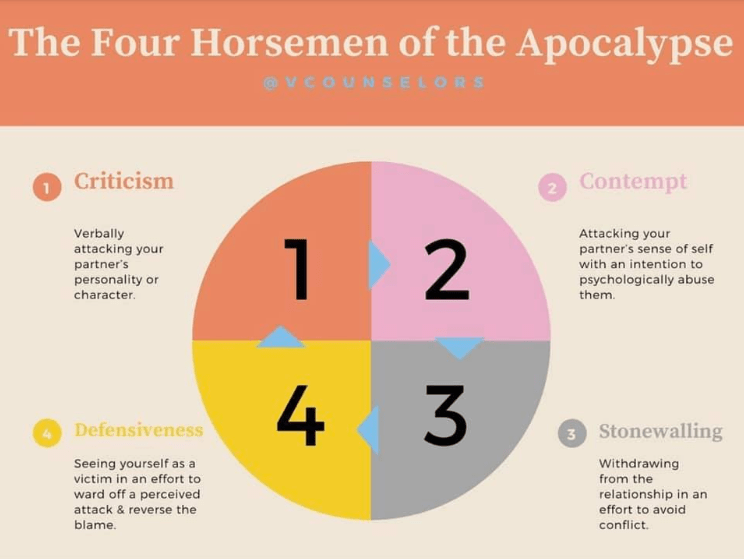
In the world of relationship psychology, Dr. John Gottman is a leading authority. Throughout his years of studying relationship dynamics, he has identified what he calls the “Four Horsemen of the Apocalypse”—four communication styles that predict relational breakdown: Criticism, Contempt, Defensiveness, and Stonewalling.
While Gottman’s insights are aimed at couples, I’ve come to realize that these same patterns can creep into our relationship with God.
Yes, even our spiritual life can experience a kind of relational erosion—especially when life is hard, prayers go unanswered, or we’re just plain spiritually exhausted.
Let’s take a closer look at each “Horseman” and how we can respond in a way that restores connection with God.
1. Criticism: “God, You Never Show Up!”
In relationships, criticism attacks the person rather than the issue. When it comes to God, criticism can sound like, “God, You never help me” or “Why are You always punishing me?”
This is more than honest lament—it becomes accusatory. We stop seeing God as a loving Father and start blaming Him for everything that goes wrong. The Psalms show us how to lament honestly without turning it into blame.
“How long, Lord? Will you forget me forever?” (Psalm 13:1)
David asked hard questions—but he asked them from a place of trust. Bring your full heart to God, even your frustration, but do it in a way that invites Him into the pain, rather than pushing Him out of it.
2. Contempt: “Why Should I Even Bother with God?”
Contempt is deadly in any relationship—it says, “I’m better than you.” With God, it can take the form of spiritual arrogance or cynicism: “God’s not going to do anything anyway.”
Sometimes it shows up in apathy. We go through the motions of faith without reverence or expectation.
Restore awe and humility.
“The fear of the Lord is the beginning of wisdom.” (Proverbs 9:10)
Gratitude, worship, silence, and beauty can rekindle reverence. When we remember who God is—and who we are not—we move from contempt to trust.
3. Defensiveness: “This Isn’t My Fault!”
Defensiveness says, “Don’t blame me!” In our spiritual life, this looks like resisting conviction. When God nudges us to grow, confess, or surrender, we push back: “But what about them?” or “I’m doing my best, God!”
We close off the parts of us that need healing. Confession opens the door to transformation.
“Search me, God, and know my heart… See if there is any offensive way in me.” (Psalm 139:23–24)
Spiritual maturity begins with vulnerability. Owning our faults before a merciful God brings healing, not shame.
4. Stonewalling: “I Just Can’t Talk to God Right Now.”
Stonewalling is shutting down—emotionally withdrawing from the relationship. With God, it can mean avoiding prayer, skipping church, or putting the Bible on a shelf because we’re too tired, angry, or numb.
Start with stillness. Even silence is a form of presence. “Be still and know that I am God.” (Psalm 46:10)
Sometimes, simply showing up in quiet—even when you have no words—is the most honest form of prayer. You don’t have to fix yourself before you come to God. Come as you are.
Grace for the Struggle
The good news? God doesn’t withdraw from us, even when we criticize, resist, or go silent. His love isn’t based on our performance—it’s based on His character. And His arms are always open.
If you’ve recognized one of the Four Horsemen in your relationship with God, you’re not alone—and you’re not stuck. With honesty, humility, and a little courage, you can move toward deeper intimacy.
God is not scared of your anger, your doubts, your silence, or your sin.
He just wants to be close to you.
Maybe today is a good day to talk to God again—not with fancy words, but with your real heart.
Be blessed!! Be a blessing!!
 Jimbo's Jots
Leave a comment